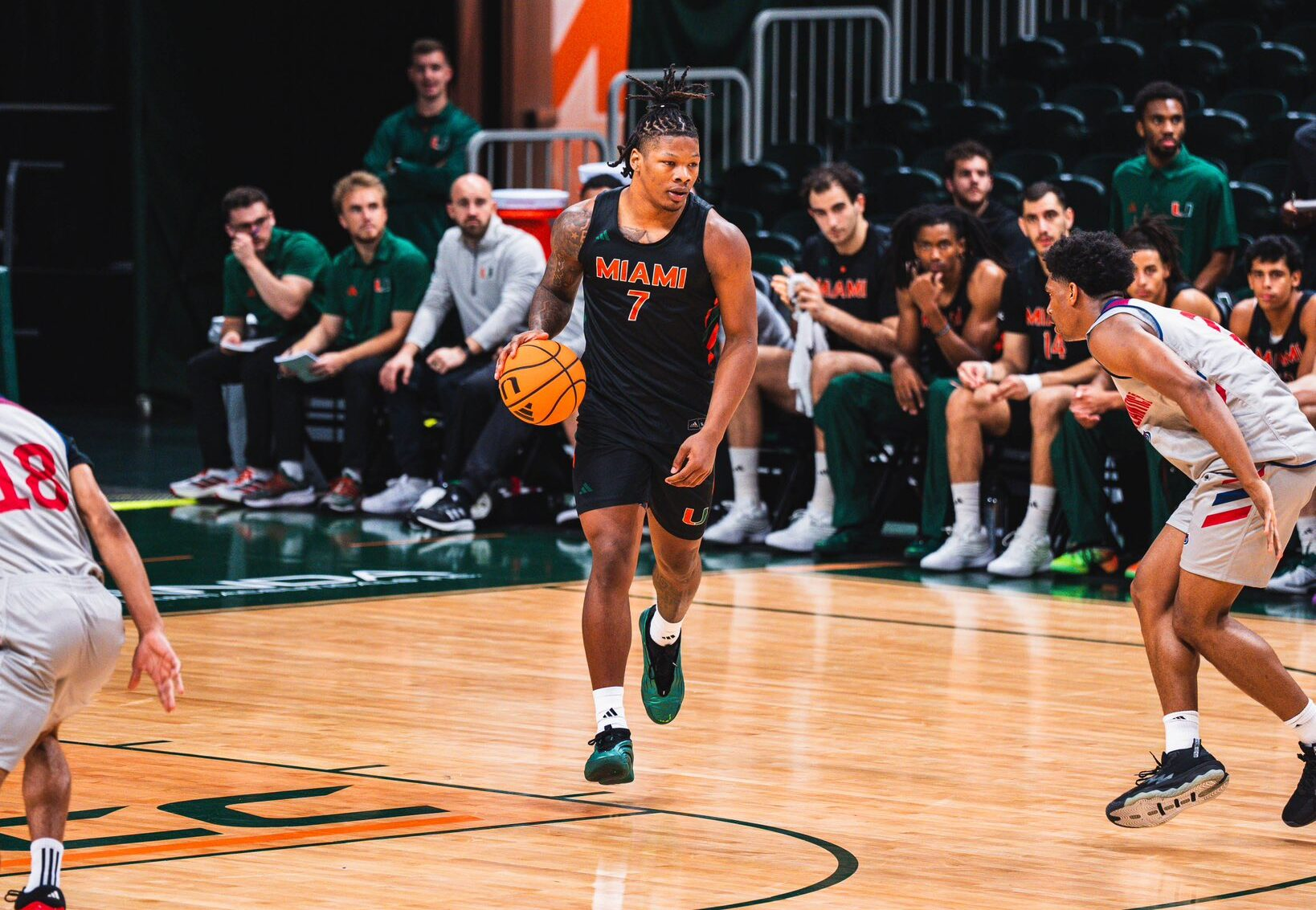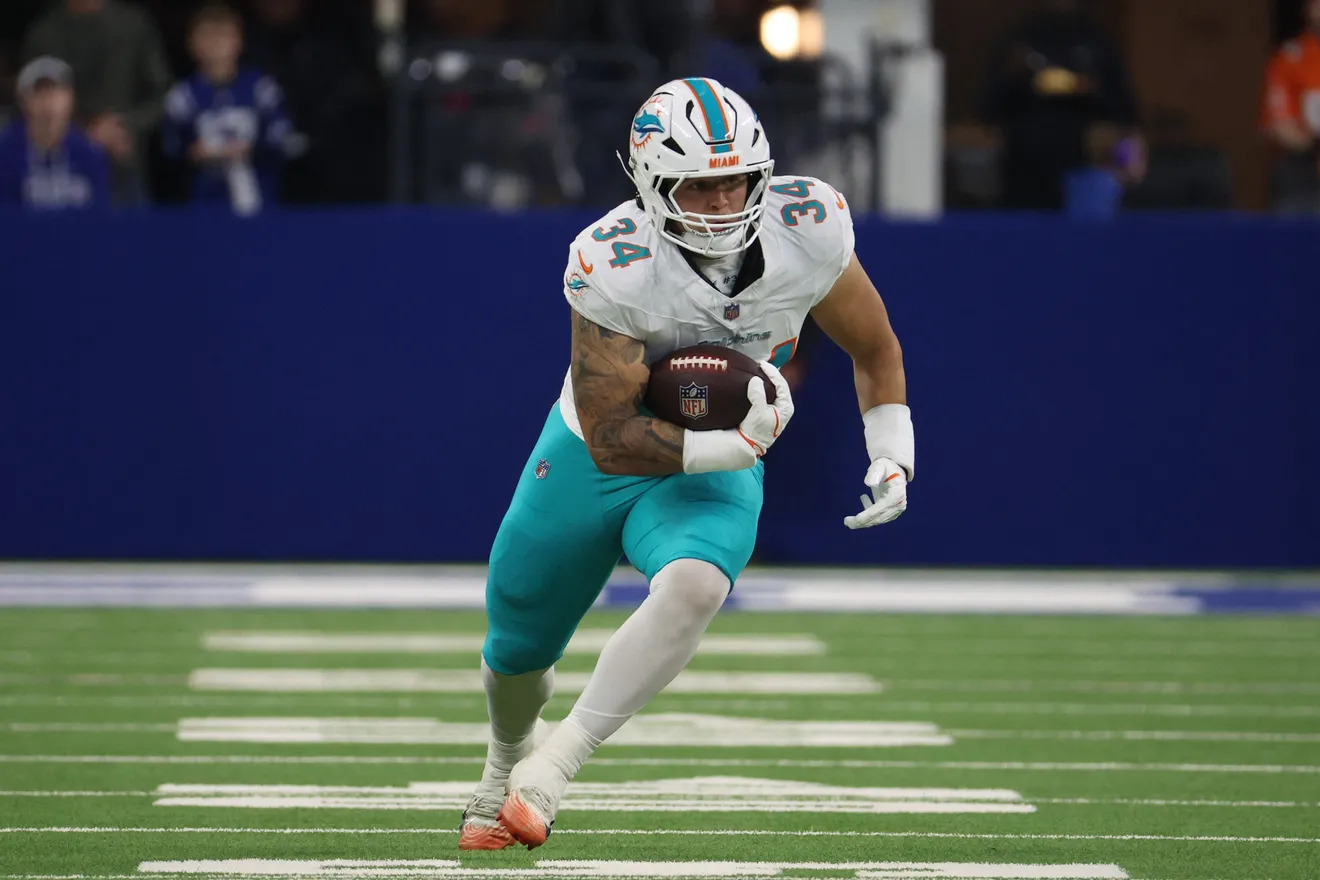
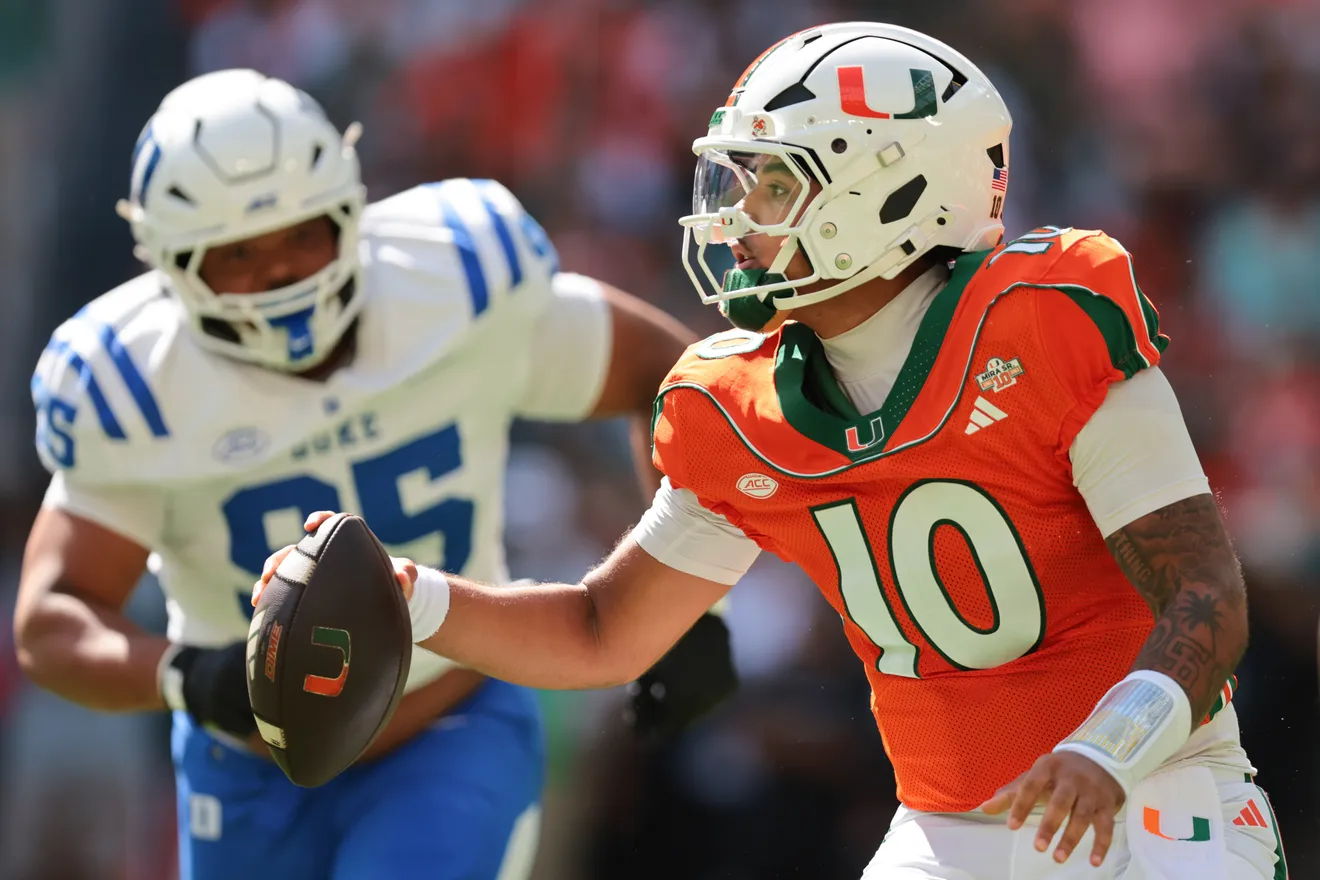
Miami deserves credit for this win. Facing a red-hot Duke team, the No. 7 Hurricanes produced 532 total yards in a 36-25 victory, improving to 9-1. Javian Mallory delivered three touchdowns, Darian Mensah settled into the game, and Cooper Barkate put together a big afternoon against his former team.
Frustrating stretches remained, particularly with penalties, tackling, and red-zone execution. But Miami built a 36-17 lead before Duke’s late touchdown and two-point conversion narrowed the margin. Against a confident team, the Hurricanes made enough plays to take control while showing areas that still need improvement.
1. Javian Mallory and Jordan Lyle Give Miami a Spark
Javian Mallory continues to give this offense something special. His quickness and acceleration showed up as both a runner and receiver, especially when Miami got him into space. He finished with 150 yards from scrimmage and three touchdowns, rushing for 71 yards and two scores on 10 carries while adding three catches for 79 yards and another touchdown. His ability to turn a screen into an explosive play helped Miami create separation. I want to keep seeing the offense find ways to get him touches because he can make a defender miss and change a possession quickly.
Jordan Lyle also deserves recognition. He brought energy to start the second half and finished with 54 yards on seven carries, averaging 7.7 yards per attempt. He looked decisive attacking his opportunities and helped give the running game some life. Mallory and Lyle combined for 125 rushing yards on 17 carries, while Mark Fletcher Jr. added a rushing touchdown. Against a confident Duke team, those contributions helped Miami maintain its offensive momentum.
2. Mensah Finds His Rhythm, and Barkate Delivers Against His Former Team
Darian Mensah finished 30/41 for 382 yards, one touchdown and no interceptions, but his performance improved as the game progressed. Early on, I wanted him to be more decisive and get the ball out sooner. Jacobs made a strong effort on one opportunity where an earlier throw would have put him in a better position. Later, Mensah looked more comfortable taking what Duke gave him and improvising when necessary. Finishing without an interception mattered, especially in a game where penalties were already making some possessions harder.
Cooper Barkate was his most productive target, catching eight passes for 134 yards against his former team. He became a major part of Miami’s second-half success, finding opportunities and creating yardage after the catch. Daylyn Upshaw added six catches for 56 yards, Vandrevius Jacobs had five for 44, and Elija Lofton finished with five for 39. Miami distributed the ball well, but the red-zone struggles kept the offense from fully capitalizing on that production early. The passing game did plenty to win this matchup, even with opportunities left on the field.
3. Nate Sheppard Shows Why He Was Such a Concern
Nate Sheppard was one of my biggest concerns entering this game, and he showed why. He finished with 224 yards from scrimmage and two rushing touchdowns, collecting 131 yards on 16 carries and another 93 yards on 12 receptions. He even completed both of his passing attempts for 16 yards. Duke repeatedly found ways to put the ball in his hands, and his versatility made him difficult to contain. He deserves credit for his performance and for being such a significant part of Duke’s offense.
That does not excuse Miami’s missed tackles or problems holding contain. There were encouraging snaps where the defense swarmed the ball and the interior defensive line won its matchups, but the consistency was missing. The linebacker play remains a concern for me, especially when defenders have to operate in space. Against a player like Sheppard, poor angles and missed tackles become expensive quickly. Miami needed to do a better job limiting the extra yardage after the initial opportunity to make a stop.
4. The Defense Creates Opportunities but Needs to Finish Them
Miami generated pressure early and had stretches of tight coverage, but the Hurricanes finished without a sack. Duke converted 5/12 third downs and both fourth-down attempts, extending possessions when Miami had chances to get off the field. Some of the most frustrating moments came after the defense had already created a favorable down-and-distance situation. Against a red-hot opponent, those are opportunities to take away momentum, and Miami did not consistently capitalize on them.
I also wanted more variation in the pressure packages instead of repeatedly bringing a safety from depth. If that pressure does not arrive, the defense still has to handle the space behind it and finish tackles. Xavier Lucas provided an important positive with Miami’s lone interception, delivering a takeaway after an earlier dropped opportunity. There were good individual moments across the defense, but I want to see them translate into more complete possessions. Winning the early downs has to lead to getting off the field.
5. Penalties and Uneven Guard Play Leave Room for Improvement
Miami committed 10 penalties for 67 yards, compared with Duke’s four for 18. Early holding calls and repeated pre-snap mistakes interrupted drives and forced the offense to overcome unnecessary setbacks. Beating a good opponent while making those mistakes shows what Miami can accomplish, but it also highlights how much cleaner this performance could have been. These are avoidable problems that can become much more costly in a tighter game.
The offensive line deserves credit for allowing no sacks on 41 passing attempts, even though I still wanted more consistent play from the guards. Rhys Woodrow received rotational work at left guard, and the interior remains a group worth watching. Miami averaged 7.3 yards per play and held the ball for 34:13, so there was plenty of successful offensive football. Better execution inside and fewer penalties would help the Hurricanes turn that production into touchdowns sooner and keep opponents from hanging around.
Final Thoughts
This was a good win against a red-hot Duke team, and Miami should get credit for taking control in the second half. Mallory’s explosiveness, Lyle’s energy, and the Mensah-Barkate connection helped the Hurricanes build a 19-point lead before the late score. At 9-1, Miami continues to put itself in a strong position. I still want cleaner tackling, better discipline, and more consistent execution in scoring territory, but there was plenty to feel good about in this performance.