
There are three running backs at the top of this class for me: Jadan Baugh, Kewan Lacy and LJ Martin. Setting injuries aside, I see very few major holes in their games. Each can lead an NFL backfield and contribute on passing downs.
After those three, there is a tier break. The next group has more noticeable limitations, but that does not mean they cannot become good starters or valuable contributors. Their roles just require more projection.
The comparisons below represent different possible outcomes based on playing style. They are not predictions that a prospect will duplicate another player’s career.
1. Jadan Baugh | Florida | Junior | 6'1", 225 pounds
High-end comparison: Le’Veon Bell
Restrained comparison: James Conner
Baugh is my RB1 because his contact balance is absurd. Someone his size shouldn't be this agile or make the jump cuts he does. He can beat you around the corner, run through your face, or take your ankles. That combination of power and movement skills gives him multiple ways to create yards.
I also like him out of the backfield. Florida does not ask him to run an extensive route tree, with much of his involvement coming as a checkdown option, but I see upside beyond that role. Developing that part of his game would bring the Bell comparison more into play.
If that receiving upside never fully develops, Conner is my restrained comparison. That is still a very good player who can lead a backfield through physical running, contact balance, and useful receiving production.
His recent struggles deserve acknowledgment, but I attribute much of that to defenses selling out to stop him. I still want him to take the available yards more consistently instead of occasionally searching for a bigger play. His long speed is also less exceptional than his short-area movement.
I do not consider Baugh a generational running back worthy of a top-10 pick. The 11-19 range feels right to me. As much as I like him, I do not think Miami has the luxury of making that investment with its other roster needs.
2. Kewan Lacy | Ole Miss | Junior | 5'11", 205 pounds
High-end comparison: Jamaal Charles
Restrained comparison: D’Andre Swift
Lacy’s burst is elite. When he sees an opening, he gets through it quickly, and he has the acceleration to threaten the edge. His vision and patience help him set up blocks, while his quick feet allow him to make defenders miss without losing much forward momentum.
He also runs physically for his size. His contact balance and willingness to finish through defenders make him more than just a speed back. There is receiving upside, but I want more consistent hands and better pass-protection technique.
Charles is my high-end comparison because of the acceleration, efficient cuts, and ability to turn a small opening into an explosive run. That does not mean I expect Lacy to match Charles’s exceptional long speed. Swift represents a dangerous runner who contributes as a receiver while sharing the workload.
My biggest concern is durability. Lacy suffered shoulder and hamstring injuries during last season’s playoff run, then underwent offseason shoulder surgery. This season, he sustained an AC joint injury against LSU, battled another hamstring issue against Missouri, and dislocated the same shoulder against Texas.
He has shown he can handle volume, but consistently staying available is another question. His talent keeps him at RB2, with the repeated shoulder problems a significant concern.
3. LJ Martin | BYU | Senior | 6'2", 225 pounds
High-end comparison: Chris Carson
Restrained comparison: Latavius Murray
Martin and Mark Fletcher are comparable to me as bigger backs who run physically and offer more movement ability than their size suggests. Martin has the vision to find openings, useful lateral quickness, and the contact balance to keep producing through tackles.
What puts him ahead of Fletcher is his three-down upside. He is a more proven pass catcher and can contribute in protection. I am not projecting an elite receiving back, but I trust him to provide a useful outlet and handle responsibilities beyond carrying the ball.
Carson is my high-end comparison. He did not always get the recognition of the league’s elite backs, but he was a great back when healthy. Injuries unfortunately interrupted his career. His physical running, receiving usefulness, and dependable protection represent a strong outcome for Martin. Murray is the more restrained comparison: a productive bigger back who can lead a backfield or contribute in a rotation.
Martin lacks Lacy’s elite acceleration, can run upright, and needs more consistent leg drive through contact. Availability also matters: he underwent shoulder surgery after last season and has missed four straight games with a lower-body injury.
The Next Tier
Fletcher and Isaac Brown start the next group for me. Their strengths can translate into productive NFL roles, but their limitations are more noticeable than my top three's.
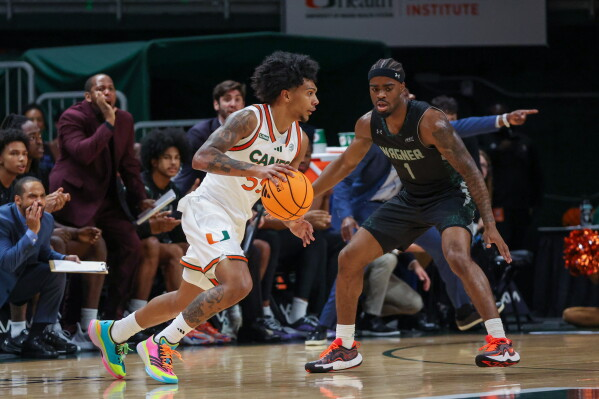
4. Mark Fletcher Jr. | Miami | Senior | 6'2", 225 pounds
High-end comparison: LeGarrette Blount
Restrained comparison: Gus Edwards
Fletcher is a very patient runner who punishes defenders. His power and leg drive are elite. He moves piles, keeps working through contact, and consistently falls forward. Tackling him one-on-one is tough. The play against Sonny Styles last season, when they met in the hole and Fletcher bounced off him, captures that difficulty.
Although he is a power back, he has good wiggle. His jerky running style helps him make defenders miss, and he has shown multiple times this year that he can create when the blocking fails.
Blount is my high-end comparison because of the punishing power and surprising agility for a bigger back. Fletcher could become an impactful lead runner without developing a major receiving role. Edwards represents a dependable early-down and short-yardage outcome, although that captures less of Fletcher’s wiggle.
His physicality carries into pass protection, but his technique can lapse, and he can miss assignments. My bigger concern is his catching ability and whether he can become a dependable three-down back. That keeps him behind Martin.
Fletcher also runs naturally high. Keeping his pads lower more consistently would help him get even more out of his power.
5. Isaac Brown | Louisville | Junior | 5'9", 190 pounds
High-end comparison: De’Von Achane
Restrained comparison: Keaton Mitchell
Brown is special with the ball. His acceleration and breakaway speed can turn a small opening into a touchdown, and his quick feet and ability to change direction make him difficult to get a clean shot on.
He also has the vision and patience to work with his blocking. The explosiveness gets your attention, but his ability to recognize space and adjust gives him more ways to create.
Achane is my high-end comparison, assuming Brown develops his receiving and becomes a more complete offensive weapon. Mitchell is the restrained comparison because he preserves the smaller frame and breakaway threat, even if Brown’s role stays more limited.
My concern is a heavy NFL workload. I would rather maximize his explosiveness with another back sharing carries. His protection, receiving consistency and ball security also need work. His athleticism creates passing-game possibilities, but I do not want to assume those skills are already fully developed.
Those questions keep him fifth for me. They do not prevent him from becoming a major weapon in the right offense.
Others in This Tier
Ahmad Hardy, DeSean Bishop and Wayshawn Parker belong in the same group as Fletcher and Brown, but I currently have them behind those two. Bishop is the engine that runs Tennessee’s offense, and Parker’s talent still stands out to me. Hardy’s injury factors into his placement. Each has questions in his evaluation, but all can become productive NFL backs.
Late-Round Target:
Wayne Knight | UCLA | Fifth-Year Senior | 5'7", 193 pounds
High-end comparison: Maurice Jones-Drew
Restrained comparison: Justin Forsett
Knight is a very tough runner for his size. He has a solid, compact build, and his low center of gravity helps him stay balanced through contact. He is patient setting up blocks, comfortable working through traffic, and has enough acceleration to punish a defense that leaves space outside.
His receiving ability and return experience give him multiple ways to contribute. He can provide an outlet, create after the catch, and compete for special-teams duties while earning offensive opportunities.
Jones-Drew is my high-end comparison. The UCLA connection is a nice detail, but the comparison comes from Knight’s compact frame, toughness, and ability to contribute as a runner and receiver. That is an ambitious ceiling. Forsett captures a more restrained outcome built around patience, instincts, and receiving usefulness.
The concerns are long speed and pass protection. His initial acceleration stands out more than his ability to consistently run away from defenders, and his cuts can become less decisive near full speed. He also needs to prove he can reliably protect the quarterback.
If Knight is available in the sixth or seventh round, I would be interested. That availability is not guaranteed, but his toughness, receiving and return experience make him worth watching.
What This Means for Miami
I like this running back class, but Miami needs to weigh the position against the rest of its roster. Baugh is my clear RB1, yet that does not mean I would prioritize him with an early first-round pick.
Sullivan’s emphasis on building through the draft makes it important to find useful contributors throughout the board. I'd prefer to address the bigger needs early and look for backfield value later. Knight is one option if he reaches that range, while the players in my second tier could become interesting depending on their price.